I started hinting at a bit of a medical issue in the 2 August 2026 issue:
I’m parked in a hotel near a hospital as I knew I needed some relatively minor surgery. After examination by a couple of specialists, it rose beyond “minor” but I still won’t call it major. NOTE: I am definitely not dying from this. It’s not that serious.
Thailand is known for excellent medical care, so it’s handy we’re in the area anyway. I’m not sure how much I’ll say in the free edition, but note it’s already much harder to work on the road, my attention is obviously heavily divided, and thus please don’t email your best wishes. I’m already overwhelmed: after spending all day at the hospital today for exams and tests, I’m out of energy, but at least I get two days to rest before surgery. I can’t manage an Honorary Unsubscribe at this point. I’ll follow up on this in a week or three. Thanks.
I noted that we were in the delightfully named Sriracha — also sometimes spelled Si Racha, sometimes even in the same sentence — Thailand.
I asked ChatGPT why there are two spellings, used interchangeably. As usual its response was way too wordy, so here’s the gist of it: There isn’t one universally followed romanization system of rendering Thai language into English. “Thailand has an official standard — the Royal Thai General System of Transcription (RTGS) — but even the government is inconsistent about using it.” Bottom line is the RTGS official transcription is Si Racha. Then it gets interesting.
“Sriracha became the internationally recognized spelling because of the famous chili sauce. Once the sauce became popular worldwide, that spelling stuck in English, even though it isn’t the official transcription of the town.” But it’s not arbitrary: “The first part of the Thai name is the Sanskrit-derived honorific (Sri) meaning something like ‘glorious’ or ‘auspicious.’ In ordinary Thai pronunciation, the r in that is only weakly pronounced (or effectively silent for many speakers), so the official transcription simplifies it to Si. Historically and internationally, many people retained the etymological Sri, giving Sriracha” as one or two words.
“REAL Sriracha Comes from Thailand!” says these little bottles of sauce from Crying Thaiger brand. On special for 3 baht (1 cent) off: 32 baht is about US98¢. (Randy Cassingham)
The sauce was first concocted in 1932 by a native of Si Racha, and made famous in the U.S. starting around 1980 by Huy Fong Foods of Irwindale, Calif., which happened to be along my commute route when I was first working at the Jet Propulsion Laboratory. They were making it specifically for pho restaurants (which yes, I know, is Vietnamese, not Thai). Huy Fong’s “rooster sauce” (from the rooster pictured on the bottle) broke into the mainstream thanks to its great chili-garlic mix, which is when I first noticed it and used it.
Many Residents of our ship pretty well demanded that our food needed more spice and flavor, and food services responded first by making sriracha available at every meal, and then expanding that to a spice bar with sambal (an Indonesian/Malay chili sauce), a couple of kinds of curry paste, pepper flakes, soy sauce, and more, always available on the buffet.
9 August Update
By the next week, I knew for sure I was headed into surgery, for what became three separate procedures. I asked Mike if he could write all the stories for this issue, and further to write up why. He did, and I added a brief note too:
How we got to the hospital from our hotel, a few km away: the hotel provided a tuk-tuk (very similar to the one parked in the photo, for an “outside” view). (Randy Cassingham)
First, thank you for honoring my request for you to not send well-wishes — there were only a couple.
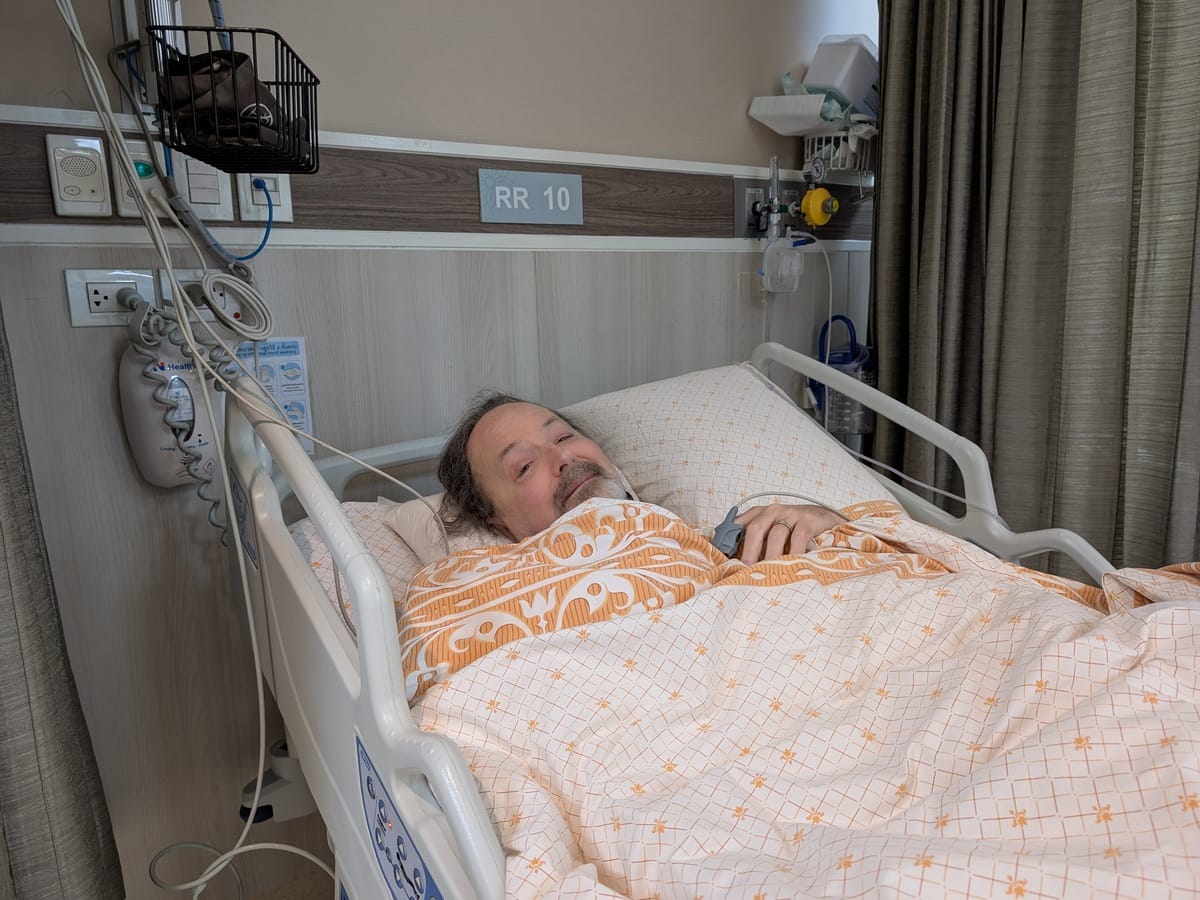
Second, I checked into the hospital Thursday morning for late afternoon(!) surgery: we combined three procedures into one stint in the O.R. (with three surgeons) to not have repeated anesthesia, and to have only one recovery period. Probably saved a fair amount of money, too. It did make the first 72 hours of recovery fairly rough: I pretty much couldn’t even get out of bed for the first 24 hours.
But once I did, I could feel improvements every few hours. Bottom line is, I’m really glad Mike could do all the stories this week. For me, at least, editing is a lot easier than writing.
I almost certainly need one more surgery, which we’re planning to do next month. Luckily the ship is scheduled to be in the area until early October. I’m still taking the Honorary Unsubscribe on an “energy available” basis, and not-quite-4-days after surgery, my energy is going toward recovery.
Meanwhile, please continue keep my inbox clear of everything but business for another week or so. Thank you!
Whether that fourth procedure will be needed is still TBD, but likely.
16 August Update
Feeling Much Better: A day after surgery, I couldn’t lift my head, let alone get out of bed. Four days after that, I went on a 1.5-mile walk with Kit in 88-degree (31C) heat, enjoyed a Thai coffee …and then had a nap. Still, modern surgery is a miracle. No bleeding (thanks, superglue), and not-very-bad pain.
Breakfast was included at the hotel, in huge variety. After appointments, my treat was an evening plate of “Spicy Salmon” at the hotel’s rooftop bar: smoked salmon topped with raw Thai chilies and a little lemongrass, and a tiny pitcher of a spicy dressing that I poured over the top. I kept it sane by just putting one slice each of red and green chili in each piece of salmon, and boy was it good. Added benefit: Thai chilies don’t hurt the next day. (Randy Cassingham)
I asked my still-active mastermind group how much I should talk about it here, and their advice was, whatever serves me and my recovery best; no need to decide quickly. I’ve already written some about it, but don’t feel a rush to publish it. I wrote about it for a very good friend who had a brush with death a few years ago, and he was so open to me about his experience I laughed when he asked for gory details. “I ALWAYS want to see surgery pics!” he said. “I was so mad that they didn’t get video of [mine].” Well, I don’t have pics of my surgery either, but sent him a couple of pics of my “gnarly scars,” one set of which, Kit observed, “looks like Morse Code.” What letter is dot-dash dot? I had to look it up: R. Satisfactory.
My buddy’s a standup comedian turned actor turned long-time entrepreneur, mostly online, who I’ve known for 30 years. Naturally he made jokes about my situation, so when I sent the details it was with the intent of making him laugh. I often write about heavy stuff (like ambulance calls) to help process the resulting emotions, but I’m not finding my situation terribly heavy, even though it’s a serious medical challenge. So “we’ll see” how much I’ll write, and when.
Today we’re holed up in a hotel in Da Nang after flying in from Thailand, and catching up with the ship tomorrow once they dock. Life is good. More later …maybe!
But once I published that, I felt like I was hiding: like I had something to be ashamed of. Not because of my condition, but rather because I wasn’t talking about it clearly. A few days before the next issue came out, I started drafting what I really wanted to say.
The Morse Code scar was the result of a hernia repair: an MRI checking my prostate found that just as I was starting to feel it.
23 August Update
I Don’t Like Pussyfooting around: I’m a plain speaker, and find not being clear about what’s going on regarding my surgery to be oppressive. With that: my third procedure in my recent surgery was a biopsy, and it came back positive, AKA confirmed cancer. The “good” news is, it’s one of the most treatable and survivable in that it’s prostate cancer, and treatment has already started. The particularly good news is, it was caught early enough that it has not spread (metastasis). The “bad” news is, the treatment is really draining: I run out of energy in the late morning and need to nap mid-day, though I think I’m starting to adapt: no nap needed today!
The other “bad” news is, I don’t have clarity on the next steps, and am asking the doctor to help with that. It could mean getting off the ship for up to several months of treatment, but I’m hoping that won’t be the case. If you happen to be an experienced uro-oncologist and don’t mind answering some questions, drop me a line; I know the difference between “suggestions” and “official medical advice,” and am looking for the former. (Removed as I don’t want what I was getting: “I’ve asked my aunt to check with her husband’s guy to see if he wants to talk with you.” No good doctor wants to talk to such strangers.)
This sweetheart (no, I mean the one in the middle) was our rooftop bar waitress, who took great care of us whenever I had the energy to go up there. She even wanted her own selfie to help her remember us! (Randy Cassingham)
Meanwhile my “new job” is compiling all the bills and such to submit to insurance. While medical care in Thailand is very good, and very cheap by American standards, the costs still add up quickly. (This is NOT a plea for money: we’ve saved for this possibility! Plus, that’s what insurance is for.)
I do ask that you help by continuing to not send well-meaning messages; I appreciate the thought, but with thousands of readers it quickly clogs up communications that I do need to deal with, such as customer support questions, feedback on stories, etc. Thank you.
So there it is. This was caught by a sudden jump in my PSA score; we did routine bloodwork on one of our stops in Singapore, and got the results when part-way to Thailand. In other words, yes: we have been keeping up on our wellness visits, even though we’re skipping around the world and don’t stay in any one place all that long. No excuses: get your routine checkups so you can get early warning to take care of things before they get serious! End of Public Service Announcement. 🙂
Yes, comments are open and you’re welcome to post them, but please: something other than “get well”!
31 August Update
Not a bad view while we get ready to head back to Thailand: Ha Long Bay, Vietnam (Randy Cassingham)
On my last day at the hospital they did a CT scan to determine the cancer’s “stage.” I finally got those results today, and it’s worse than anticipated: Stage IIIB (T4 N0 M0). Still not a death sentence: the American Cancer Society lists the current U.S. 5-year relative survival for regional prostate cancer as >99%.
The next step: my care has been transferred to the hospital’s more-capable Bangkok headquarters. I’m scheduled for a PET scan in a couple of weeks to get the data needed to determine the next steps for treatment, which are likely to be surgery and/or radiation. We are currently in Vietnam, so we will fly to Thailand in a week or so, and hope to meet the ship when it returns to Thailand in October.
20 September Update
Back in Bangkok, and I got good news from doctors: the PET scan shows no spread at all, thus my “stage” is down one notch (from T4 N0 M0 to T3 N0 M0), so they actually used the “C-word” in telling me my alternatives for treatment: “cure”.
Kit visited me in Recovery after another brief surgery. I had forgotten she was there until she showed me this and I saw my wedding ring: the moment she was able to see me she slipped it back on my finger, and that I remembered. 🙂 (Kit Cassingham)
For my specific situation, five sessions of high-intensity radiation (“stereotactic body radiation therapy”) has essentially the exact same 10-year survival rate as removal surgery …which could need to be followed up by some amount of radiotherapy, and would need significant recovery time, pain meds, and temporary to permanent other issues no one wants to deal with.
Even the surgeon admitted radiation was a better choice. It will probably begin next week.
With luck, timing will be such that I’ll be done and able to join the ship again when it arrives for its second visit to Thailand. I look forward to going home.
24 September Mini-Update
Radiation treatment started today, and will continue every other day through October 2. We will stay overnight and then, with luck, return to the ship the next day to sleep in my own bed once again.
I will continue to update this page from time to time.
– – –
Bad link? Broken image? Other problem on this page? Please Let Me Know using the Help button in the lower right, and thanks.
This page is an example of my style of “Thought-Provoking Entertainment”. This is True is an email newsletter that uses “weird news” as a vehicle to explore the human condition in an entertaining way. If that sounds good, click here to open a subscribe form.
To really support This is True, you’re invited to sign up for a subscription to the much-expanded Premium edition.
Rate This Post
Click on a star to rate it:
Average / 5. Count:
Page Views (since 1 Aug 2020):1,436
20 Comments on “No More Pussyfooting”
I feel for you. I had a high PSA score, had a biopsy 2 weeks ago, and get the results on Sept 1.
Thanks for letting us know.
— Best of luck, Jim. The wait is agonizing! -rc
The wait was indeed mind-numbing and soul-searching. I was lucky, the results were benign — turns out there are multiple reasons for an enlarged prostate. I go back to Dr. Bigfinger in a year.
— Awesome news! I’m so happy for you that I’m grinning. -rc
Hi Randy, thanks for the openness and the Public Service Announcement about the PSA testing (ironic that they’re both PSA!). Twenty years ago, my PSA reading jumped rapidly up to 6.0, leading to biopsy and treatment in short order. The treatment option I chose was brachytherapy (radioactive “seed” implants), a not unpleasant procedure. Now, my semi-annual PSA readings have averaged 0.021 over the last 3 years. Best wishes for similar success in whatever treatment path you choose.
— Glad it worked so well for you. Brachytherapy is indeed one of the options the doctor mentioned, and sounds like a good start to me. -rc
The husband of my best friend had Brachytherapy over 30 years ago when it was a new treatment. He lived for over 26 years thereafter to pass away from a heart condition at age 86. He was also given hormone therapy. He found that more a bit more difficult to tolerate. I’m sure they have perfected the procedures and treatments in the meantime. We will keep you in out thoughts and prayers.
— Indeed most with prostate cancer die from other causes long before the cancer gets bad, and treatments improve yearly. I’m not all that worried! 🙂 -rc
I too am a member of the PC club. Just hitting my 1-year anniversary. I opted to go the androgen deprivation therapy (ADT) and radiation route. There were several ADT methods I could go with, but I decided go with a monthly injection of Firmagon, and it worked out well for me. For treatment I went with a gel barrier injection (between the colon and prostate) to help protect the large intestine, and daily doses of radiation (28 doses, one per day, 5-days a week). I don’t know if it was the process or my body type, but I was able to remain active and felt few side-effects during the entire process. I’m not sure how well this would work in your situation, but it was obviously much less invasive than surgical removal. Good luck to you whichever method you decide on.
— Hadn’t heard of the gel yet; interesting. -rc
I also got the diagnosis of prostate cancer last year after an increase of my PSA (but still within the limits). An MRI scan and later a biopsy confirmed the diagnosis, also — as in your case — in an early state, without any spread. I got two options for the treatment: surgery to remove my prostate or a combined radiation and hormonal therapy. I chose the first option since it’s the most sure one to get rid of the cancer if there’s no spread. Of course, you have to deal with the side effects for most people: incontinence for a few weeks/months and erectile dysfunction (which may take up to 1 or 2 years). The latter is a major obstacle for many men.
I got my operation with robotic surgery on 24 February and it went very well. I could leave hospital after 2 days and didn’t even had to take pain relievers once I got home. I started physical therapy 6 weeks later to cope with the incontinence and it’s already much better now. I have a checkup every 3 months and my PSA value is still beneath the detection limit.
So I keep my fingers crossed for the future. I hope you will be able to do the same.
PS: for the record: I’m 69 years old now.
— Thanks, Rudy. -rc
Four years ago my PSA shot up to 7. Biopsy revealed cancer with a Gleason score of 7 (4,3). The cancer was close to escaping the capsule. After discussing the options with my urologist I opted for radiation plus androgen deprivation therapy (ADT). The first radiation consisted of inserting a series of wires into the prostate and zapping some high dose radiation into it. This was done with just spinal anesthesia. Unfortunately the spinal wore off half way through the procedure. They put a hefty dose of fentanyl or hydromorphone (can’t remember which) in my IV. When the surgeon yanked the wires out I involuntarily screamed. Now I know what it would feel like to get stabbed. The anesthesiologist said that had never happened to him before.
The second phase of the radiation was 25 sessions (5 days a week for 5 weeks) of highly focused external radiation. The worst part of this was having to have a full bladder and empty bowel and lying perfectly still for 20 minutes. A couple of times I peed all over.
After this all appeared well. My PSA went down to 0.1 or lower. Unfortunately after a few months it started to creep up again. An MRI was ordered which revealed the cancer had spread to several lymph glands. So now I am on several meds to keep it in check: abiraterone, prednisone, leuprolide and denosumab.
So far, so good. PSA and testosterone levels are staying near zero. I only have to see the oncologist every six months. Of course there is always the possibility that the drugs will stop working, but I’m not going to worry about what might happen.
— Quite the story! Clearly, readers are getting the idea that there are a lot of variables and individual factors, and the occasional indignity. All of which is valuable to realize. -rc
My father and father-in-law both had prostate cancer. One opted for nerve sparing surgery and the other for the seeds. If you got the nerve-sparing surgery, invest in puppy pads.
Stage 4 thyroid cancer in January 2008. With treatment I have been stable for years and feeling fine. Best of luck.
— Happy for you! That’s the way to do it. -rc
I am an 18 year prostate cancer survivor. My “treatment” was a prostatectomy at the Duke University Prostate Cancer Clinic; it was “robotically assisted,” a technique so new that the equipment for it didn’t exist in my home town (Wilmington, NC). My older brother (still alive at 91) opted for radioactive seeds for his prostate cancer, and his side effects were the same as mine (impotence). Seven friends living in our neighborhood came down with prostate cancer, and all are surviving today but experiencing the same side effects as my brother and I after their surgery. None regrets his decision.
Get those mammograms. The number of my friends who’ve had breast cancer in the last 15 or so years is quite shocking.
— Absolutely a good reminder for the ladies, and often far more serious. -rc
Kent, I wonder if you were actually reminding men that they, too, can get breast cancer?
— I don’t *think* that was what he was saying, more that “not only men have a cancer problem,” but what you’re saying IS of course true too. -rc
Replying to Randy actually: Not only for the ladies, as it turns out. (Saw this comment as I was reading through and thinking: well, as a woman I don’t have anything to say about prostate cancer…).
I don’t know of routine mammograms even being available to men, but be aware: rarer, but according to what I’ve learned recently men represent about 20% of current breast cancer cases. My beloved husband asked his doc about a lump he noticed; after a mammogram and other testing, he has needed two surgeries and is receiving ongoing treatment for Stage 3. If you feel a lump or see a discharge, please talk to your physician.
— I do know men get breast cancer, so it’s good you posted this reminder. My best to you and your husband. -rc-rc
When my brother was diagnosed with PC a few years ago he was told the options were radiation and surgery. He talked to both a surgeon and a radiation doctor about the upsides and downsides of each. When he asked the radiotherapist which option he would choose if he had PC the doc told him “surgery”. That’s the route my brother went, and he’s glad he did. He was also told he could have radiation after surgery if needed, but that surgery after radiation was not possible. Good luck.
Yup, keep those routine checkups coming! I haven’t said anything publicly yet (until this moment, I guess), but that MRI at the end of July, part of my ongoing schedule of surveillance screening to watch for any possible recurrence, suggested some nodules in my lungs. A followup bone scan last Monday ordered by my oncologist suggested a lesion on a rib. It’s almost certainly all renal cell carcinoma, which, fwiw, falls under that “good cancer” category we’re not supposed to talk about! (I guess I’m allowed.)
Probably starting a new round of immunotherapy this month, two different drugs than the one I did through 2024. No one has offered any odds, and I haven’t looked for them. I’m planning on sticking around to enjoy my retirement for a while, and I’m hoping to keep reading your work for a while.
— Thanks, Mark, for “coming out” here. I wish you the best outcome. -rc
Prostate cancer can occasionally be very aggressive. My late husband’s had already metastasized when it was found. He was just 49, which is very young for PC. His first PSA count, after some symptoms led it to be taken, was 905. His second, after antibiotics (the initial thought was infection) was 1500. At that point he was sent for a PET scan, which found cancer in bones throughout his body. Surgery was obviously not going to help. He did keep it in check for a little while with anti-androgens, then did a series of chemos, with an occasional radiation treatment thrown in for palliative reasons. He kept going for twenty months. He was well enough to work that entire time, though, and he continued to sing in the church choir, and we were able to travel several times. I’m convinced it helped his mood to do those things. His company was amazingly flexible and kind — I’m still grateful.
His situation was extremely unusual, I think. At the time PSA tests weren’t even recommended in the US until age 50. This was also in 2008-2010, and research on treatments has progressed.
— Sorry you both had to go through that. Super job by the employer, though! Nice to hear that. Cool that he got a lot of living done in that 20 months. -rc
I’m 73 now. I got diagnosed with PC during the height of COVID. 5 years later, I’m still in Active Observation, recommended by 3 doctors at Dana Farber. My PSA is on a roller coaster — 8 months ago it spiked to 8.6. 2 months ago, 7.2. Gleason Score is the lowest and best (5) after 3 biopsies so far. PSAs every 6 months. Dr. Finger says prostate is enlarged consistent with my age. Biopsies so far show just a 10% area of cancer from 1 of 12 samples taken, and it’s not near the outer wall of the prostate. My Dad died from PC and metastasis at 73 years and 10 months to the day. His last 2 years were rough for him. My +10 months will be February 26. I tell younger guys, don’t blow it off. Get the PSA done. One positive — I was sedated for my last biopsy this past February; trust me, it’s a much better experience than a local anesthesia.
— Yeah, I was very happy to be under anesthesia for my biopsy (thanks to the hernia repair at the same time). Also, who can not be charmed by a urologist named Dr. Finger?! At least, I hope that’s his real name! 😀 (Note: I’m not approving comments for a long list of appropriate doctor names; they are not on-subject.) -rc
Thanks for the PSA. Every man should know about this.
I started to get an Annual PSA about 10 years ago, when a very good friend was diagnosed. Unfortunately, his was very advanced.
I try to remember to ask my Dr. to include it when he has labs done near my birthday each year. I consider a <.01 a birthday present.
— Anything <1 is great! Happy for you. Mine is already down to 3, and treatment has barely started. Getting on it early gives the best chance, so yes: PSA tests should begin early, if for no other reason than getting a baseline. -rc
Those of us who have gone thru this prostate process feel for u. I realize it’s a little late for you now but I wanted to mention in this forum some info for ur readers who might go through the same, at any time. If ur cancer presents itself “favorably”, radical surgery isn’t necessary. There are options which include various focal ablations. My oncologist, from a well known cancer facility in the NYC area, simply asked me how I wanted to handle the treatment/surgery, without ever discussing “options”. At the time, I thought surgery was my only option. We scheduled the surgery. But a bud, who had been through this a few years back, told me about the ablation procedure options. Thank u goud! I cancelled the surgery and received the one time procedure. 5 days after the procedure I was back on my bike & playing tennis again. Just sayin’. And get a second opinion!
— Definitely get a second opinion. I’ve now seen three urologists, a supervising oncologist, a radiation oncologist, and a surgeon. I definitely do not lack for opinions! Glad you got your second, though. I think it’s malpractice to say “You decide!” without telling you the options and tradeoffs first. I definitely did hear about tradeoffs. -rc
Sorry you’ve joined the PC club, though you’ll find its members very supportive. I had surgery, but PSA rose again. Just finished a second round of follow-up radiotherapy, and I’m on ADT for a couple of years. There are many options for treatment at each stage, tailored to your exact circumstances, and new approaches are emerging all the time, so I’m quite positive about the long term.
— I absolutely will continue to monitor PSA when I’m done for just that reason. Do research extended ADT since there are tradeoffs, but possibly absolutely recommended for your specific situation — “ADT for one year max” may be one new guideline, but specific situations may bend that rule. -rc


I feel for you. I had a high PSA score, had a biopsy 2 weeks ago, and get the results on Sept 1.
Thanks for letting us know.
—
Best of luck, Jim. The wait is agonizing! -rc
The wait was indeed mind-numbing and soul-searching. I was lucky, the results were benign — turns out there are multiple reasons for an enlarged prostate. I go back to Dr. Bigfinger in a year.
—
Awesome news! I’m so happy for you that I’m grinning. -rc
Hi Randy, thanks for the openness and the Public Service Announcement about the PSA testing (ironic that they’re both PSA!). Twenty years ago, my PSA reading jumped rapidly up to 6.0, leading to biopsy and treatment in short order. The treatment option I chose was brachytherapy (radioactive “seed” implants), a not unpleasant procedure. Now, my semi-annual PSA readings have averaged 0.021 over the last 3 years. Best wishes for similar success in whatever treatment path you choose.
—
Glad it worked so well for you. Brachytherapy is indeed one of the options the doctor mentioned, and sounds like a good start to me. -rc
The husband of my best friend had Brachytherapy over 30 years ago when it was a new treatment. He lived for over 26 years thereafter to pass away from a heart condition at age 86. He was also given hormone therapy. He found that more a bit more difficult to tolerate. I’m sure they have perfected the procedures and treatments in the meantime. We will keep you in out thoughts and prayers.
—
Indeed most with prostate cancer die from other causes long before the cancer gets bad, and treatments improve yearly. I’m not all that worried! 🙂 -rc
I too am a member of the PC club. Just hitting my 1-year anniversary. I opted to go the androgen deprivation therapy (ADT) and radiation route. There were several ADT methods I could go with, but I decided go with a monthly injection of Firmagon, and it worked out well for me. For treatment I went with a gel barrier injection (between the colon and prostate) to help protect the large intestine, and daily doses of radiation (28 doses, one per day, 5-days a week). I don’t know if it was the process or my body type, but I was able to remain active and felt few side-effects during the entire process. I’m not sure how well this would work in your situation, but it was obviously much less invasive than surgical removal. Good luck to you whichever method you decide on.
—
Hadn’t heard of the gel yet; interesting. -rc
I also got the diagnosis of prostate cancer last year after an increase of my PSA (but still within the limits). An MRI scan and later a biopsy confirmed the diagnosis, also — as in your case — in an early state, without any spread. I got two options for the treatment: surgery to remove my prostate or a combined radiation and hormonal therapy. I chose the first option since it’s the most sure one to get rid of the cancer if there’s no spread. Of course, you have to deal with the side effects for most people: incontinence for a few weeks/months and erectile dysfunction (which may take up to 1 or 2 years). The latter is a major obstacle for many men.
I got my operation with robotic surgery on 24 February and it went very well. I could leave hospital after 2 days and didn’t even had to take pain relievers once I got home. I started physical therapy 6 weeks later to cope with the incontinence and it’s already much better now. I have a checkup every 3 months and my PSA value is still beneath the detection limit.
So I keep my fingers crossed for the future. I hope you will be able to do the same.
PS: for the record: I’m 69 years old now.
—
Thanks, Rudy. -rc
Four years ago my PSA shot up to 7. Biopsy revealed cancer with a Gleason score of 7 (4,3). The cancer was close to escaping the capsule. After discussing the options with my urologist I opted for radiation plus androgen deprivation therapy (ADT). The first radiation consisted of inserting a series of wires into the prostate and zapping some high dose radiation into it. This was done with just spinal anesthesia. Unfortunately the spinal wore off half way through the procedure. They put a hefty dose of fentanyl or hydromorphone (can’t remember which) in my IV. When the surgeon yanked the wires out I involuntarily screamed. Now I know what it would feel like to get stabbed. The anesthesiologist said that had never happened to him before.
The second phase of the radiation was 25 sessions (5 days a week for 5 weeks) of highly focused external radiation. The worst part of this was having to have a full bladder and empty bowel and lying perfectly still for 20 minutes. A couple of times I peed all over.
After this all appeared well. My PSA went down to 0.1 or lower. Unfortunately after a few months it started to creep up again. An MRI was ordered which revealed the cancer had spread to several lymph glands. So now I am on several meds to keep it in check: abiraterone, prednisone, leuprolide and denosumab.
So far, so good. PSA and testosterone levels are staying near zero. I only have to see the oncologist every six months. Of course there is always the possibility that the drugs will stop working, but I’m not going to worry about what might happen.
—
Quite the story! Clearly, readers are getting the idea that there are a lot of variables and individual factors, and the occasional indignity. All of which is valuable to realize. -rc
My father and father-in-law both had prostate cancer. One opted for nerve sparing surgery and the other for the seeds. If you got the nerve-sparing surgery, invest in puppy pads.
Stage 4 thyroid cancer in January 2008. With treatment I have been stable for years and feeling fine. Best of luck.
—
Happy for you! That’s the way to do it. -rc
I am an 18 year prostate cancer survivor. My “treatment” was a prostatectomy at the Duke University Prostate Cancer Clinic; it was “robotically assisted,” a technique so new that the equipment for it didn’t exist in my home town (Wilmington, NC). My older brother (still alive at 91) opted for radioactive seeds for his prostate cancer, and his side effects were the same as mine (impotence). Seven friends living in our neighborhood came down with prostate cancer, and all are surviving today but experiencing the same side effects as my brother and I after their surgery. None regrets his decision.
A somewhat related PSA:
Get those mammograms. The number of my friends who’ve had breast cancer in the last 15 or so years is quite shocking.
—
Absolutely a good reminder for the ladies, and often far more serious. -rc
Kent, I wonder if you were actually reminding men that they, too, can get breast cancer?
—
I don’t *think* that was what he was saying, more that “not only men have a cancer problem,” but what you’re saying IS of course true too. -rc
Replying to Randy actually: Not only for the ladies, as it turns out. (Saw this comment as I was reading through and thinking: well, as a woman I don’t have anything to say about prostate cancer…).
I don’t know of routine mammograms even being available to men, but be aware: rarer, but according to what I’ve learned recently men represent about 20% of current breast cancer cases. My beloved husband asked his doc about a lump he noticed; after a mammogram and other testing, he has needed two surgeries and is receiving ongoing treatment for Stage 3. If you feel a lump or see a discharge, please talk to your physician.
—
I do know men get breast cancer, so it’s good you posted this reminder. My best to you and your husband. -rc-rc
When my brother was diagnosed with PC a few years ago he was told the options were radiation and surgery. He talked to both a surgeon and a radiation doctor about the upsides and downsides of each. When he asked the radiotherapist which option he would choose if he had PC the doc told him “surgery”. That’s the route my brother went, and he’s glad he did. He was also told he could have radiation after surgery if needed, but that surgery after radiation was not possible. Good luck.
Yup, keep those routine checkups coming! I haven’t said anything publicly yet (until this moment, I guess), but that MRI at the end of July, part of my ongoing schedule of surveillance screening to watch for any possible recurrence, suggested some nodules in my lungs. A followup bone scan last Monday ordered by my oncologist suggested a lesion on a rib. It’s almost certainly all renal cell carcinoma, which, fwiw, falls under that “good cancer” category we’re not supposed to talk about! (I guess I’m allowed.)
Probably starting a new round of immunotherapy this month, two different drugs than the one I did through 2024. No one has offered any odds, and I haven’t looked for them. I’m planning on sticking around to enjoy my retirement for a while, and I’m hoping to keep reading your work for a while.
—
Thanks, Mark, for “coming out” here. I wish you the best outcome. -rc
Prostate cancer can occasionally be very aggressive. My late husband’s had already metastasized when it was found. He was just 49, which is very young for PC. His first PSA count, after some symptoms led it to be taken, was 905. His second, after antibiotics (the initial thought was infection) was 1500. At that point he was sent for a PET scan, which found cancer in bones throughout his body. Surgery was obviously not going to help. He did keep it in check for a little while with anti-androgens, then did a series of chemos, with an occasional radiation treatment thrown in for palliative reasons. He kept going for twenty months. He was well enough to work that entire time, though, and he continued to sing in the church choir, and we were able to travel several times. I’m convinced it helped his mood to do those things. His company was amazingly flexible and kind — I’m still grateful.
His situation was extremely unusual, I think. At the time PSA tests weren’t even recommended in the US until age 50. This was also in 2008-2010, and research on treatments has progressed.
—
Sorry you both had to go through that. Super job by the employer, though! Nice to hear that. Cool that he got a lot of living done in that 20 months. -rc
I’m 73 now. I got diagnosed with PC during the height of COVID. 5 years later, I’m still in Active Observation, recommended by 3 doctors at Dana Farber. My PSA is on a roller coaster — 8 months ago it spiked to 8.6. 2 months ago, 7.2. Gleason Score is the lowest and best (5) after 3 biopsies so far. PSAs every 6 months. Dr. Finger says prostate is enlarged consistent with my age. Biopsies so far show just a 10% area of cancer from 1 of 12 samples taken, and it’s not near the outer wall of the prostate. My Dad died from PC and metastasis at 73 years and 10 months to the day. His last 2 years were rough for him. My +10 months will be February 26. I tell younger guys, don’t blow it off. Get the PSA done. One positive — I was sedated for my last biopsy this past February; trust me, it’s a much better experience than a local anesthesia.
—
Yeah, I was very happy to be under anesthesia for my biopsy (thanks to the hernia repair at the same time). Also, who can not be charmed by a urologist named Dr. Finger?! At least, I hope that’s his real name! 😀 (Note: I’m not approving comments for a long list of appropriate doctor names; they are not on-subject.) -rc
Thanks for the PSA. Every man should know about this.
I started to get an Annual PSA about 10 years ago, when a very good friend was diagnosed. Unfortunately, his was very advanced.
I try to remember to ask my Dr. to include it when he has labs done near my birthday each year. I consider a <.01 a birthday present.
—
Anything <1 is great! Happy for you. Mine is already down to 3, and treatment has barely started. Getting on it early gives the best chance, so yes: PSA tests should begin early, if for no other reason than getting a baseline. -rc
All this while a traveling resident. Timing!
Those of us who have gone thru this prostate process feel for u. I realize it’s a little late for you now but I wanted to mention in this forum some info for ur readers who might go through the same, at any time. If ur cancer presents itself “favorably”, radical surgery isn’t necessary. There are options which include various focal ablations. My oncologist, from a well known cancer facility in the NYC area, simply asked me how I wanted to handle the treatment/surgery, without ever discussing “options”. At the time, I thought surgery was my only option. We scheduled the surgery. But a bud, who had been through this a few years back, told me about the ablation procedure options. Thank u goud! I cancelled the surgery and received the one time procedure. 5 days after the procedure I was back on my bike & playing tennis again. Just sayin’. And get a second opinion!
—
Definitely get a second opinion. I’ve now seen three urologists, a supervising oncologist, a radiation oncologist, and a surgeon. I definitely do not lack for opinions! Glad you got your second, though. I think it’s malpractice to say “You decide!” without telling you the options and tradeoffs first. I definitely did hear about tradeoffs. -rc
Sorry you’ve joined the PC club, though you’ll find its members very supportive. I had surgery, but PSA rose again. Just finished a second round of follow-up radiotherapy, and I’m on ADT for a couple of years. There are many options for treatment at each stage, tailored to your exact circumstances, and new approaches are emerging all the time, so I’m quite positive about the long term.
—
I absolutely will continue to monitor PSA when I’m done for just that reason. Do research extended ADT since there are tradeoffs, but possibly absolutely recommended for your specific situation — “ADT for one year max” may be one new guideline, but specific situations may bend that rule. -rc