
In early 2021, I started a new online project called What It’s Like To… to tell stories that other people might want to know about.

Such as, What It’s Like To Save a Life. Adopt a Child. Be an Air Traffic Controller.
We did all of those stories and more. I started it off with that first topic — Save a Life. The idea was not for me to write it all, but for others to contribute stories so that I could find out What It’s Like To do things I haven’t done too.
The stories were meant to be a quick read: I enforced a maximum length.
But I couldn’t get enough stories; there are plenty of easy ways for people to tell their stories without fussing with an editor. That, and the readership was both small, and not growing. I gave up. Sadly, when my tech bag was stolen on a cruise, the site’s backup went with it, and the other backup was lost to a glitch.
Bringing Back a Bit of WiLt
All is not lost from WiLt (what I called it for short): the stories are still also published on Medium.com, which is where I got this one to bring it back home. It’s the opposite of Saving a Life, which I might bring back later.
I’m putting this into my blog in August 2025, but I’m dating it as of its original publication, 27 April 2021 — the first issue of WiLt.
What It’s Like to
Lose a Child Patient
by Randy Cassingham
I was an ALS medic in rural northern California, and there’s one call I think of often — even though it was 38 years ago. We were dispatched to a possible drowning in the Mad River, which reaches the Pacific just north of the town of Arcata, where we were based.
We arrived just as the bystander who went into the river for the boy found him, pulled him out, and ran him to us. My partner and I got him onto the gurney and got to work. With cardiac arrest, the best chance of survival is to work on them then and there, not take the trip to the hospital and then work on them.
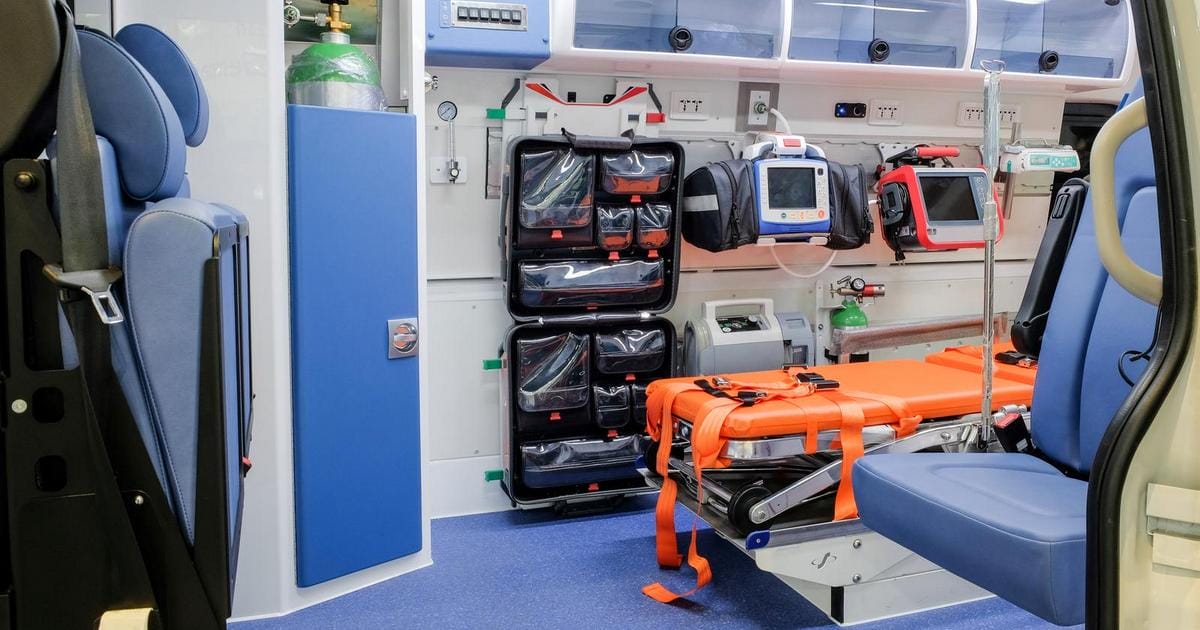
It was one of those times that you do everything at once. Start chest compressions. Get the cardiac monitor going. Breathe for him. Start an I.V., and get your drugs lined up.
Chest compressions are most important. While CPR stands for Cardio-Pulmonary Resuscitation (also supporting breathing), chest compressions also compress lungs, pushing out stale air and sucking in fresh. That’s enough for awhile.
My EMT partner quickly wiped the boy down with a towel and started compressions; I was responsible for the rest. I got the I.V. going and pushed epinephrine (“adrenalin”) to stimulate his heart. To defibrillate (shock) the heart back into action you have to have some sort of heart action. The epi helped: I could see light activity on the cardiac monitor.
In those days we still used paddles (now it’s sticky pads: odds are you’ll need to shock more than once). As the defibrillator charged I looked out the open back doors for the first time, where a small crowd had gathered to watch. They were totally silent: I didn’t even know they were there! “Make sure you’re not touching the ambulance,” I told them, even though it’s almost impossible for them to be shocked.
All but one guy stepped back, and I registered his presence for the first time. It “had to be” the guy who fished the kid out of the water, because he was stark naked. It was surreal, but Paddles charged! Back to work!
My partner moved back and I shocked the kid, but there wasn’t much response: you want strong muscle spasms, which indicates oxygenated tissues. After more rounds of drugs and shocks with no results, his chances were dismal, but I told my driver to get going: it was only 3 miles to the hospital, but winding town streets the whole way. The E.R. doctor went over the same protocols …and pronounced him dead.

Robert Greer was 12 years old. If he had lived he’d be 50 now — hard to imagine!
The man who pulled him out of the water was Garland Popp, and I never saw him again. I didn’t keep any notes from that day and had forgotten their names until I found this newspaper clipping. It took Popp about 20 minutes to find Greer and pull him out, so his odds were about nil from the start.
While I still sometimes think about that day, I’ve always known I couldn’t have done more to increase his odds. I hope Popp was able to have peace with it too.
It Was a Worthwhile Project with around 50 stories I thought were well worth the quick read, but it didn’t gain an audience. I shut it down that October. I meant to leave it up, but the second-to-last copy was accidentally lost in a server move. Even the Internet Archive doesn’t have it. Fate? Maybe. But losing the real child was a lot more painful than losing WiLt.
– – –
Bad link? Broken image? Other problem on this page? Please Let Me Know using the Help button in the lower right, and thanks.
This page is an example of my style of “Thought-Provoking Entertainment”. This is True is an email newsletter that uses “weird news” as a vehicle to explore the human condition in an entertaining way. If that sounds good, click here to open a subscribe form.
To really support This is True, you’re invited to sign up for a subscription to the much-expanded Premium edition.
I remember I kept getting anti-virus warnings when trying to access those stories. I have no idea what was going on there and couldn’t figure it out. I finally gave up. The ones I was able to read were very worthwhile.
This is a hard story. Everyone involved should be commended. I hope the boy’s mother was comforted to know that every effort was made. It can’t have been easy for her or for anyone else there.
—
I have a vague memory of the false positive malware alerts, but there most definitely wasn’t any. -rc